You are scheduled for an outpatient procedure at AndreasKlinik Cham Zug soon. To help you prepare optimally, you will find the most important information here
Important information before admission
Admission Time
You can find your admission time on the reservation confirmation that was sent to you by post. If no time is indicated, we will inform you via the following channels:
By SMS: We will be happy to send you an SMS with your admission time on the day before your admission. Please provide us with your mobile phone number for this purpose.
By phone the day before: You can also call us the day before your admission to find out your admission time. We can be reached Monday to Friday between 1:00 p.m. and 5:00 p.m. at T +41 41 784 09 70. If your procedure takes place on a Monday, please call already on the preceding Friday.
Admission Form
Please send us the completed and signed admission form that you received with the reservation confirmation by post as soon as possible, or bring it with you in case of short-notice admission (less than 7 days).
Procedure with Anesthesia
Please follow all information regarding anesthesia, especially the section on “Eating and drinking before admission.” For your safety, it is important that you arrive for the operation fasting.
Checklist for an Outpatient Stay
Please go through our checklist to ensure that you are properly prepared for your outpatient stay.
Admission information
Registration
Please check in at the clinic reception upon admission.
Personal Valuables
Please follow the checklist and bring only what is necessary. No liability is accepted for stolen or lost items.
Clothing
For your comfort, we recommend wearing comfortable, lightweight clothing and non-slip shoes.
Recovery Room
Depending on the procedure, you may spend some time in the recovery room. At AndreasKlinik, visits are not permitted in the recovery room.
Discharge information
Time of Discharge
The time of discharge will be determined in consultation with your treating physician.
Journey Home
Reaction time and decision-making ability may be impaired even after minor surgical procedures. Therefore, for up to 24 hours after anesthesia, you must not drive or otherwise participate independently in road traffic, and you must not consume alcohol. Please arrange for an escort or transport service for your discharge in good time.
Problems at Home After the Operation
Please contact your treating physician first. If he or she cannot be reached, the AndreasKlinik emergency department is available at T +41 784 01 44.
Questions and Information
If you have any questions about your stay, the staff of the Patient Services will be happy to assist you:
T +41 41 784 09 70
Monday- Friday: 8 - 12 and 13 - 16 o'clock
Anesthesia – Information
If you are scheduled for an outpatient procedure at AndreasKlinik, please read the following information carefully. This information is intended to help you prepare for the consultation with your anesthesiologist.
Admission information
Anesthesia Consultation
The anesthesia consultation takes place at our clinic. Please send the completed and signed anesthesia questionnaire in advance, or bring it with you in case of short-notice admission (less than 7 days).
Please bring the following to the anesthesia consultation:
Blood group card, allergy card
Advance directive
Anticoagulation card (Quick card), endocarditis prophylaxis card
Current medications in their original packaging (not removed from blister packs)
Completed anesthesia questionnaire (if not already sent to the clinic)
Medical reports, X-ray images, examination results (including laboratory results and ECG), and any reports from your general practitioner
Admission Time
You will be informed of your admission time by SMS on the day before your admission (for Monday procedures, on Friday) by 2:00 p.m. Please provide us with your mobile phone number for this purpose. If you have not received an SMS, please call +41 41 784 09 70 from 2:00 p.m. on the day before (for Monday procedures, on Friday) and no later than 4:00 p.m. to obtain your admission time yourself.
Please report to the clinic reception at your admission time in a fasting state.
Eating and Drinking Before Admission
For your safety, it is important that you are fasting. You may eat a light meal up to six hours before your admission time. After that, you must not eat anything. Up to two hours before admission, you may drink water (still), tea, and black coffee (without milk or cream).
In the two hours immediately before admission, you must not consume anything at all, including sweets or chewing gum.
Discharge information
Discharge Home
Discharge after the operation takes place in consultation with your surgeon and your anesthesiologist.
The following rules must be observed for 24 hours after your procedure:
Go home only accompanied by another person. To ensure safe care, two accompanying persons are required for children and for patients with disabilities.
Make sure that you are not alone at home.
Do not participate independently in road traffic, neither on foot nor as the driver of a vehicle. Your coordination and attention may still be impaired, even if the effects of the medication seem to be wearing off from your personal perception.
Do not make any important decisions or sign any contracts.
Pain Management
Pain medication will be administered during the operation. This will be sufficient for the first few hours after the procedure. During the remainder of your stay in the day clinic, pain management will be further optimized so that you can be discharged home with as little pain as possible.
Eating and Drinking After Discharge
You may eat and drink without restriction unless your surgeon has given you other instructions.
Follow-up Appointments
Information about any follow-up appointments will be provided directly by your surgeon.
Emergencies / Postoperative Bleeding
In the event of postoperative bleeding or other emergency situations related to the procedure, please contact your surgeon immediately or the AndreasKlinik emergency department at: T +41 41 784 01 44
Billing
The billing of outpatient services is carried out under the third-party payer (tiers payant) system. Services provided by anesthesiologists are billed directly by AndreasKlinik to your health insurance company. As a patient, you will only receive a copy of the invoice. The health insurance company settles the tiers payant invoice, and depending on the amount of your deductible, you will subsequently be billed for the remaining balance.
Important information about anesthesia
The Greek word “anesthesia” means “without sensation” or “without perception.” Modern anesthesia techniques make it possible for operations to be performed painlessly and safely.
During the preoperative consultation, the anesthesiologist will determine together with you which type of anesthesia is best suited for the planned procedure. Your anesthesiologist is responsible for your care before, during, and after the procedure. In the operating room, you will also be cared for by anesthesia nursing staff. Our team of anesthesiologists remains involved after the procedure as well, overseeing your care in the recovery room or day clinic. Particular attention is given to optimal pain management following the procedure.
The technical equipment and facilities you may notice in the operating preparation area are used to monitor your breathing and circulation. You will be continuously monitored throughout the procedure.
In principle, there are three types of anesthesia:
General anesthesia
Regional anesthesia
Local anesthesia
General Anesthesia

During general anesthesia, also known as anesthesia or a “general anesthetic,” you are placed into a sleep-like state without sensation. For this purpose, sleeping medication, painkillers, and usually a drug to relax the muscles are administered. In addition, your breathing is supported or you are artificially ventilated. As a rule, the patient’s airway is secured using an endotracheal tube (breathing tube) or a laryngeal mask.
Special monitoring devices measure vital functions and the administration of medications. Naturally, the anesthesia team accompanies and continuously monitors you throughout the entire operation.
Regional Anesthesia
Regional anesthesia refers to the elimination of pain in specific regions of the body while consciousness is maintained. Pain relief is achieved by injecting a local anesthetic—a medication that temporarily interrupts nerve conduction—together with painkillers near the nerves. This blocks the transmission of pain signals to the brain as well as commands from the brain to the muscles.
We distinguish between spinal (central) regional anesthesia and peripheral nerve blocks.
Spinal (central) regional anesthesia


Spinal (Central) Regional Anesthesia
Spinal and epidural anesthesia are among the central regional anesthesia techniques. In the outpatient setting at our clinic, spinal anesthesia is used.
In spinal anesthesia, a very thin needle is used to puncture the dura (the tough membrane surrounding the spinal cord), and the medication is injected directly into the cerebrospinal fluid (CSF) in which the spinal cord and nerves are suspended. A major advantage of this method is the very rapid onset of effect. Spinal anesthesia is suitable for most operations below the abdomen and on the lumbar spine.
Peripheral Nerve Blocks
Peripheral nerve blocks are mainly used for operations on the shoulder, arms, hands, and legs. Individual nerves or nerve plexuses are visualized using ultrasound, and the needle is advanced under direct visualization to the immediate vicinity of the nerves. Alternatively, or in combination with ultrasound, so-called nerve stimulation may be used. Weak electrical impulses delivered through the needle can cause muscle twitches, allowing precise identification of the nerves. The desired nerves are then numbed by injecting the medication through the positioned needle.
A special form of peripheral nerve block is intravenous regional anesthesia. In this technique, blood is expelled from the arm or leg using an elastic bandage, and a pressure cuff is applied to prevent blood from flowing back. A local anesthetic is then injected into a vein. The anesthetic spreads throughout the entire arm or leg, thereby blocking nerve conduction. An advantage of this method is that the arm or leg regains sensation shortly after the pressure cuff is released.
Occasionally, a regional anesthesia may not take full effect, or the nerves may become numb more slowly. For this reason, the effectiveness of the medication is tested before the operation. If—very rarely—you should still experience pain during the procedure, it is very important that you inform your anesthesiologist immediately. The anesthesia team can then administer additional pain medication or perform general anesthesia if necessary.
Local Anesthesia
Local anesthesia is used only for very small areas of the body. A local anesthetic is injected into the area of the operation to numb the affected site. This is used, for example, for minor skin procedures or for the implantation of pacemakers. If required, pain medication as well as sedatives or sleeping medication may be administered.
Side Effects and Risks
Today, patient safety in anesthesia is very high. Nevertheless, all operations and every anesthesia method involve certain risks and side effects. These depend on your state of health, your age, and the type and urgency of the procedure.
Please inform yourself about the individual risks in the separate form “Information and Consent for Anesthesia.” All information relevant to you will be discussed with you by the anesthesiologist during the preoperative consultation.
Our care
Your anesthesiologist is responsible for your care before, during, and after the procedure. In the operating room, you will also be cared for by anesthesia nursing staff. After the operation, you will be looked after in the recovery room or in the day clinic. Your breathing and circulation will be closely monitored. The pain management that begins during the operation will be continued and, if necessary, optimized. If you experience pain or feel nauseous, do not hesitate to inform the nursing staff.
Our Anesthesia Team
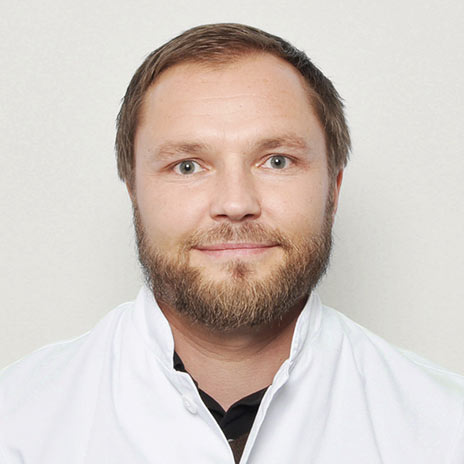
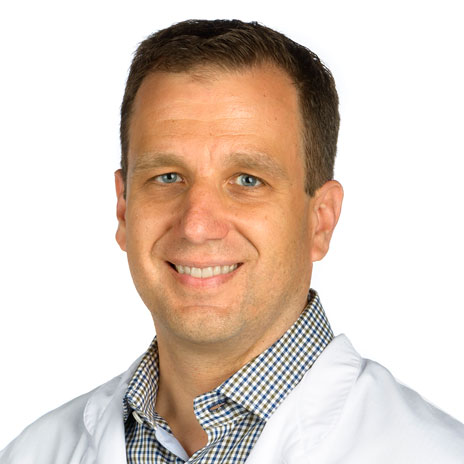
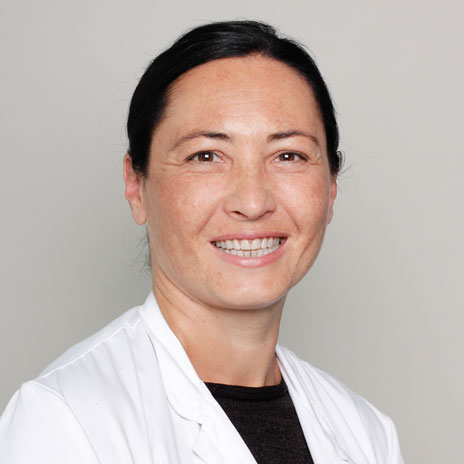
Our specialists in anesthesiology and pain management do everything possible to provide you, as a patient, with comprehensive and highly competent care. Close cooperation with all other specialists and departments at AndreasKlinik ensures that you can feel confident that you are in good hands with us.