
The collarbone (clavicle) connects the upper part of the sternum with the shoulder. A collarbone fracture (clavicular fracture) usually occurs as a result of a fall at high speed. In our article, you’ll learn how to prevent a collarbone fracture, what symptoms to look for if one occurs and how a collarbone fracture is treated.
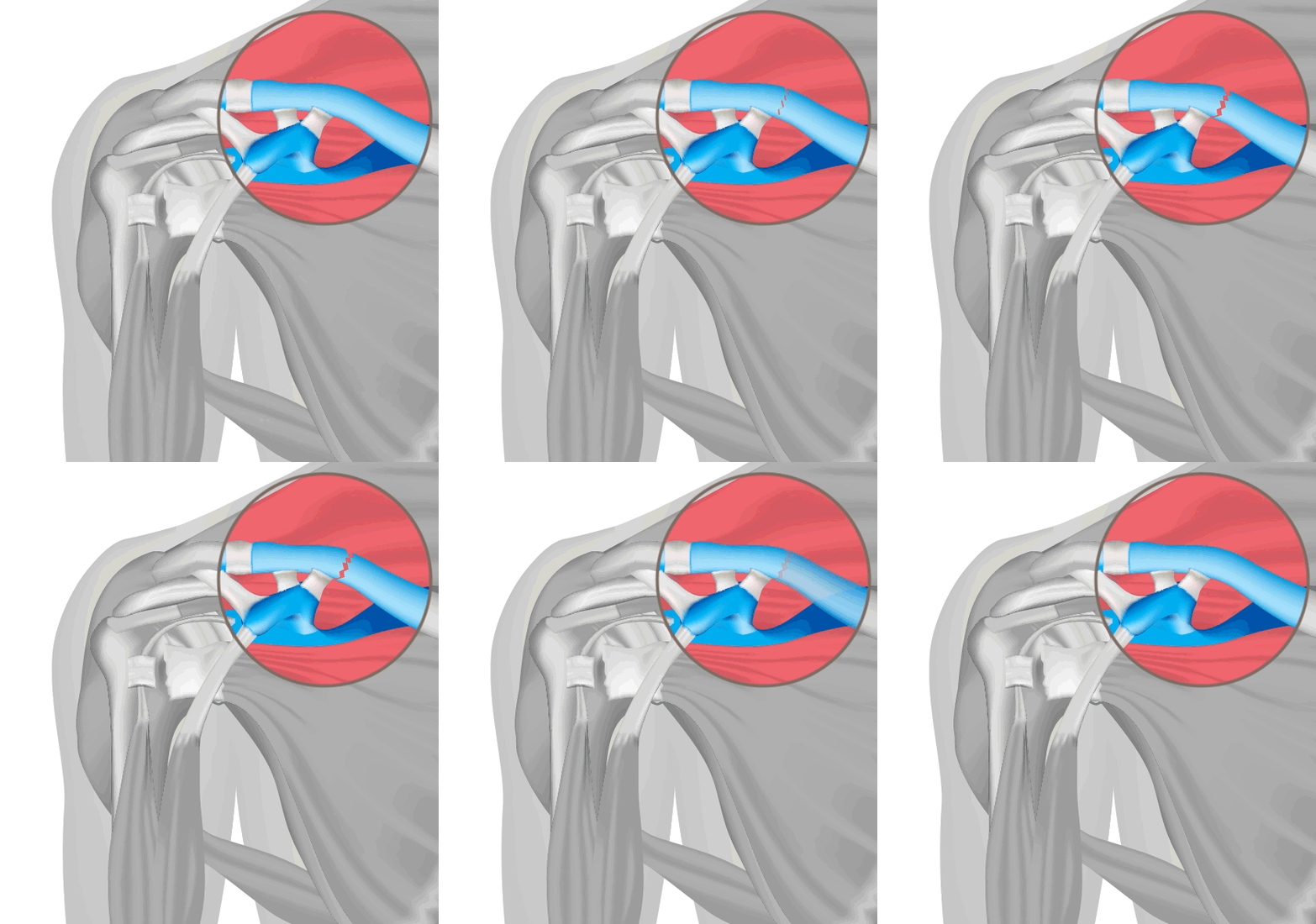
Overview of collarbone fractures
The collarbone is a long, thin tubular bone that – due to its location and structure – can break easily, especially in the event of a fall. Collarbone fractures are particularly common in sports. Around 60 out of 100,000 people are affected by this type of fracture every year. A collarbone fracture is the second most common fracture after a radius fracture.
If a fall or impact occurs at high speed on the shoulder girdle, the collarbone breaks in the middle third in about 80% of cases. Since the bone diameter at the outer ends is thicker than in the middle third and is also stabilised by many ligaments, the collarbone rarely breaks at these places.
More than 85% of all collarbone fractures occur before the age of 10. In children under five, no bone breaks more frequently than the collarbone. In fact, a collarbone fracture can even occur during childbirth.
Fortunately, a broken collarbone usually heals on its own within about six to twelve weeks. This is a type of bone fracture that is generally easily to treat. Surgery may be necessary in rare cases, depending on the type and location of the fracture.
Causes of a collarbone fracture
The vast majority of all collarbone fractures are sports injuries. For example, they often occur in motorcycle accidents, while mountain biking or snowboarding. In many cases, the bone breaks as athletes instinctively try to catch falls and fall onto their shoulder or outstretched arm.
Seat belts can also cause collarbone fractures in car accidents, for example when the seat belt tightens suddenly during a rear-end collision. A collarbone fracture can also occur in motorcycle accidents, for example if the lower edge of the motorcycle helmet is forced against the bone.
Although collarbone fractures often occur during sports, certain sports are more risky than others when it comes to the collarbone.
The following sports pose a particularly high risk for the collarbone:
- Cycling, especially mountain biking
- Skiing
- Snowboarding
- Football
- Inline skating
It’s not just sport that can end up harming the collarbone. Even childbirth can pose a risk to a baby. A collarbone fracture occurs in about one in 200 births. In such cases, a collarbone fracture usually occurs because the shoulder girdle of larger babies sometimes does not fit through the mother’s pelvis.
Symptoms of a collarbone fracture
The main symptom of a collarbone fracture is severe pain in the area of the collarbone. They can occur in particular when the person moves their arm on the side of the body where the collarbone is fractured, or when pressure is applied to the injured shoulder. Those affected usually hold their upper arm close to their torso in a protective posture. In this case, the shoulder often tilts slightly forwards.
In many cases, a collarbone fracture is accompanied by significant swelling, as the muscles pull the fragments upwards and forwards. If the fracture ends of the long bone are displaced, a step in the collarbone may also be visible and palpable. In some cases, the collarbone may also appear shortened due to the fracture. Extensive bruising (haematoma) can be another indication of a collarbone injury.
Sometimes a misalignment of the bones can also be visible from the outside. When feeling the collarbone, a crunching sound from the bone (crepitation) may be noticeable. An open collarbone fracture is rare – it is characterised by bleeding and bone ends visibly protruding through the skin.
Diagnosing a collarbone fracture
The treating doctor first checks whether typical symptoms of a collarbone fracture (also known as a clavicular fracture) can be observed. To confirm the suspected fracture and pinpoint its exact location, an X-ray of the shoulder and collarbone is then carried out. The X-ray ultimately enables a definitive diagnosis as well as an assessment of the extent, position and type of fracture.
In the case of an X-ray showing a collarbone fracture near the sternum, a computed tomography (CT) scan can assist with the diagnosis if overlapping effects occur. A CT scan makes it possible to detect even the smallest clavicular fractures.
An examination is also carried out to determine whether the blood vessels and nerves supplying the arm on the affected side have been damaged by the collarbone fracture. Such injuries can impair both the sensitivity of the arm and blood circulation, and may also restrict the movement of certain muscles. If the nerves and blood vessels are damaged, surgery on the existing fracture is advisable.
Treatment of a collarbone fracture
The majority of collarbone fractures are treated conservatively. The fractured collarbone is stabilised with what is known as a figure-of-eight bandage. This bandage must be worn for approximately 4 weeks.
With the bandage keeping the area immobilised, the fracture will heal in about 4 weeks. Depending on the location and severity of the fracture, surgery known as osteosynthesis, which uses a stabilising metal plate or nails, may be necessary to ensure that the body’s only bony connection between the shoulder and the torso heals properly and that no long-term problems arise.
Osteosynthesis is one of the most common orthopaedic surgeries and ensures optimal healing by securely fixing of bone fragments in place. You can find more information on the subject in our article on osteosynthesis.
Six weeks after the surgery, the affected arm will be able to handle everyday strains again. After a recovery period of about twelve weeks, strenuous activities such as mountain biking should be possible again.
During the recovery period, regular physiotherapy exercises are important to maintain mobility and strength in the shoulder girdle. Provided that patients receive appropriate treatment and follow-up physiotherapy, the prognosis for a collarbone fracture is good. Under these circumstances, a full recovery without any restriction of movement is possible in most cases.
Prevention
As a collarbone fracture usually occurs as a result of an accident, you can only prevent it by completely refraining from any type of sport that could cause a fall or by taking the utmost care in high-risk sports.
Protective clothing, taking care when practising sports and using the correct technique can help to prevent falls. However, the risk of a fracture can never be completely ruled out.
When should I go to a specialist hospital?
Severe pain, visible misalignment, numbness in the arm or persistent discomfort after a fall are important warning signs. If these occur, you should visit a specialist orthopaedic hospital as soon as possible in order to rule out any complications.
How common are collarbone fractures in sport?
Collarbone fractures are one of the most common sports injuries. They are particularly common when skiing, cycling or snowboarding.
Which surgeries are suitable for a collarbone fracture?
Osteosynthesis is often used for complicated fractures. Plates, screws or elastic nails are used to secure the bone fragments in place.
What should I bear in mind when choosing a hospital?
When choosing a hospital for the treatment of a collarbone fracture, you should give particular consideration to the following criteria: experience in shoulder surgery, modern diagnostic techniques and structured follow-up treatment. Various orthopaedic centres within the Hirslanden Group offer high-quality, individual care and coordinated rehabilitation.
What should I bear in mind when choosing a specialist?
Experience in treating collarbone fractures, specialisation in shoulder injuries and clear communication are important. A good doctor will take the time to answer your questions and explain the treatment clearly.
When should I see a doctor because of pain in my collarbone?
If you experience severe pain, swelling or restricted movement after a fall, you should seek medical help quickly. If symptoms persist without a clear cause, it is advisable to have them investigated.
What are the risks of a collarbone fracture?
In rare cases, this may lead to nerve irritation, delayed healing or misalignment. Early diagnosis and appropriate treatment can significantly reduce these risks.